
Maramboi Tented Camp sits on the open Maasai steppe between Tarangire National Park and Lake Manyara, working as a single base for both parks on a northern Tanzania safari. Rooms are large canvas tents raised on wooden decks, with the Rift Valley escarpment to the west and grazing plains beyond, and the Tarangire gate lies about 40 to 50 minutes away with the Manyara gate a similar drive. Because the camp is on a private conservation area outside park boundaries, zebra, wildebeest and giraffe often wander close to the tents.
Where Maramboi Tented Camp Sits on the Northern Circuit
The camp stands on a stretch of grassland near the southern shore of Lake Manyara, roughly halfway between the two parks it serves. That middle position is the main reason people book it. From here you can reach the Tarangire main gate in about 40 to 50 minutes and the Lake Manyara gate in a similar window, so a two-park stay does not force you to change camps or spend half a day in transit.
Run by Tanganyika Wilderness Camps, Maramboi occupies a private conservation area rather than the park itself. This has a practical upside. The land around the tents is open, and animals move through it freely, which means you often see zebra, wildebeest, giraffe and the odd family of warthogs from your veranda without paying a park fee for the privilege. Sightings here are casual and not guaranteed on any given day, but the setting feels alive in a way a walled compound never does.
Arusha, the usual gateway town for the northern circuit, sits about two and a half to three hours away by road. Most guests arrive as part of a guided safari that has already taken in, or is about to take in, Ngorongoro and the Serengeti further west.
The Tents and What a Stay Actually Feels Like
Accommodation is built around large walk-in safari tents, each with an en-suite bathroom, flushing toilet and hot water drawn from a solar-assisted system. The tents are spaced along the plain so that most look out toward the escarpment, and the raised decks give you a low vantage over the grass. Furnishings lean simple and comfortable rather than lavish, which fits the camp’s mid-range billing.
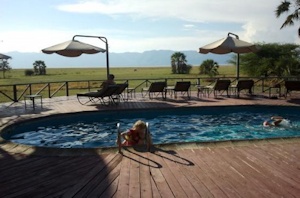
Power comes largely from solar, so charging points work through the day and into the evening, though you may find the supply gentler than a city hotel. Lighting is soft after dark. There is a swimming pool set among the tents, a welcome thing after a dusty morning game drive, plus a central lounge and dining area under thatch where meals are served buffet style.
One detail worth knowing: because the camp is unfenced and animals pass through, staff escort guests to and from tents after dark. This is standard for open safari camps and part of what makes the place feel genuine, but it is worth flagging if you are travelling with children or nervous first-timers.
Game Viewing From Maramboi and Nearby Tarangire
The plains immediately around the camp hold resident plains game for much of the year. Large herds of zebra and wildebeest graze the area, giraffe browse the scattered acacia, and you may spot ostrich or bat-eared fox on a walk near the tents. Predators are less reliably seen right at the camp, though they do range across the wider steppe.
The serious wildlife draw is Tarangire National Park, a short drive south. Tarangire is famous for its elephant numbers, which climb sharply in the dry season as the Tarangire River becomes one of the few permanent water sources for miles. Alongside the elephants you get good general game, tree-climbing pythons in local lore, and a strong chance of lion around the river and swamps. Lake Manyara, the other neighbour, brings a different mix again, with its groundwater forest, flamingos on the soda lake when water levels suit, and troops of baboons along the entry road.
Best Time to Stay at Maramboi Tented Camp
The camp is open year-round, and each season offers something different rather than a simple good-or-bad split.
The long dry season from June to October is the classic window for Tarangire. Water is scarce elsewhere, so elephants and other game concentrate along the river, and the roads stay firm. This is peak season, and the camp is busiest then.
The green season, running roughly November to May with a wetter stretch around March and April, transforms the plains around Maramboi into grazing lawns. Migratory and resident birds are abundant, newborn animals appear, and the light is soft after rain. Some game disperses out of Tarangire as water spreads across the region, so elephant concentrations are lower, but the setting around the camp itself is at its most productive.
Birders in particular do well in the green months, when the wider ecosystem supports a heavy count of species and the shallows near Lake Manyara draw waterbirds.
Getting to Maramboi and Practical Planning
Nearly everyone reaches Maramboi by road as part of a multi-day safari itinerary. The drive from Arusha runs along good tarmac for most of the way before a final graded section to the camp. If you are combining the camp with a fly-in trip, the nearest airstrips serve Lake Manyara, and a road transfer completes the last leg.
A few things smooth the stay. Park entry fees for Tarangire and Lake Manyara are separate from your camp bill and are paid at the gates by card or mobile money rather than cash, so make sure your guide or operator has that arranged. Bring layers, because mornings on the open plain can be cool before the sun climbs, and a dust-proof bag for cameras helps in the dry months.
| Feature | Detail at Maramboi Tented Camp |
|---|---|
| Setting | Open Maasai steppe between Tarangire and Lake Manyara, unfenced |
| Standard | Mid-range to upper mid-range tented camp |
| Rooms | Large walk-in safari tents on raised decks, en-suite, solar hot water |
| Drive to Tarangire gate | Roughly 40 to 50 minutes |
| Drive to Lake Manyara gate | Similar, around 40 to 50 minutes |
| Facilities | Swimming pool, thatched lounge and dining, solar power |
| Best for | Two-park stays, birders in the green season, plains-game views from camp |
Who Maramboi Tented Camp Suits Best
This is a camp for travellers who want an authentic open-plains feel without stepping up to a top luxury price. It suits couples and families comfortable with the rhythms of an unfenced camp, and it works especially well for anyone building an efficient two-park loop through Tarangire and Manyara. If your priority is being inside Tarangire itself for dawn game drives, a camp within the park may serve you better, since Maramboi still involves a short drive to the gate each morning. For most itineraries, though, the trade is worth it for the location and the wildlife that drifts past the tents.
Frequently Asked Questions About Maramboi Tented Camp
Is Maramboi Tented Camp inside Tarangire National Park?
No. The camp sits on private land on the Maasai steppe between Tarangire and Lake Manyara. You drive to the park gate for game drives, which takes roughly 40 to 50 minutes, but the open setting means resident plains game often appears around the tents.
How far is Maramboi from Arusha?
The road transfer from Arusha takes about two and a half to three hours, mostly on tarmac with a short graded final stretch. Most guests arrive as part of a guided northern circuit safari.
What is the best time of year to stay?
June to October is peak, with firm roads and heavy elephant concentrations in nearby Tarangire. November to May is greener, quieter and excellent for birds, though some game disperses. Both seasons have their merits.
Is the camp fenced?
No, it is an open camp and animals move through it. Staff escort guests to and from tents after dark as a standard safety measure, which is normal for this style of camp.
What kind of wildlife can I expect near the camp?
Zebra, wildebeest, giraffe, warthog and various birds are commonly seen on the surrounding plains, though nothing is guaranteed on a given day. The bigger game and reliable elephant sightings come from day trips into Tarangire.
How is Maramboi powered?
The camp runs largely on solar, providing hot water and charging points. Supply is steady but gentler than a mains-powered hotel, so heavy appliances like hairdryers may not always run.